
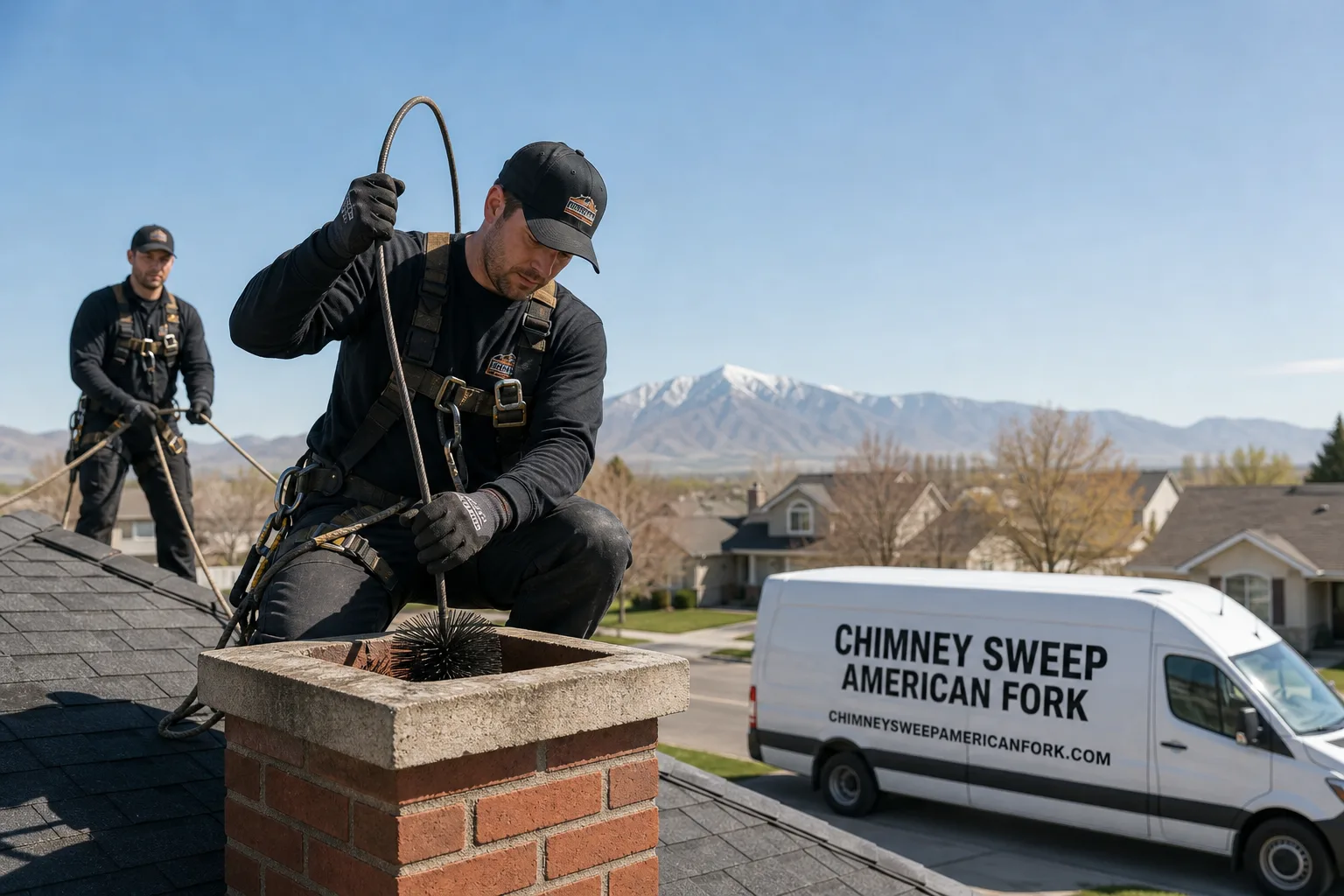
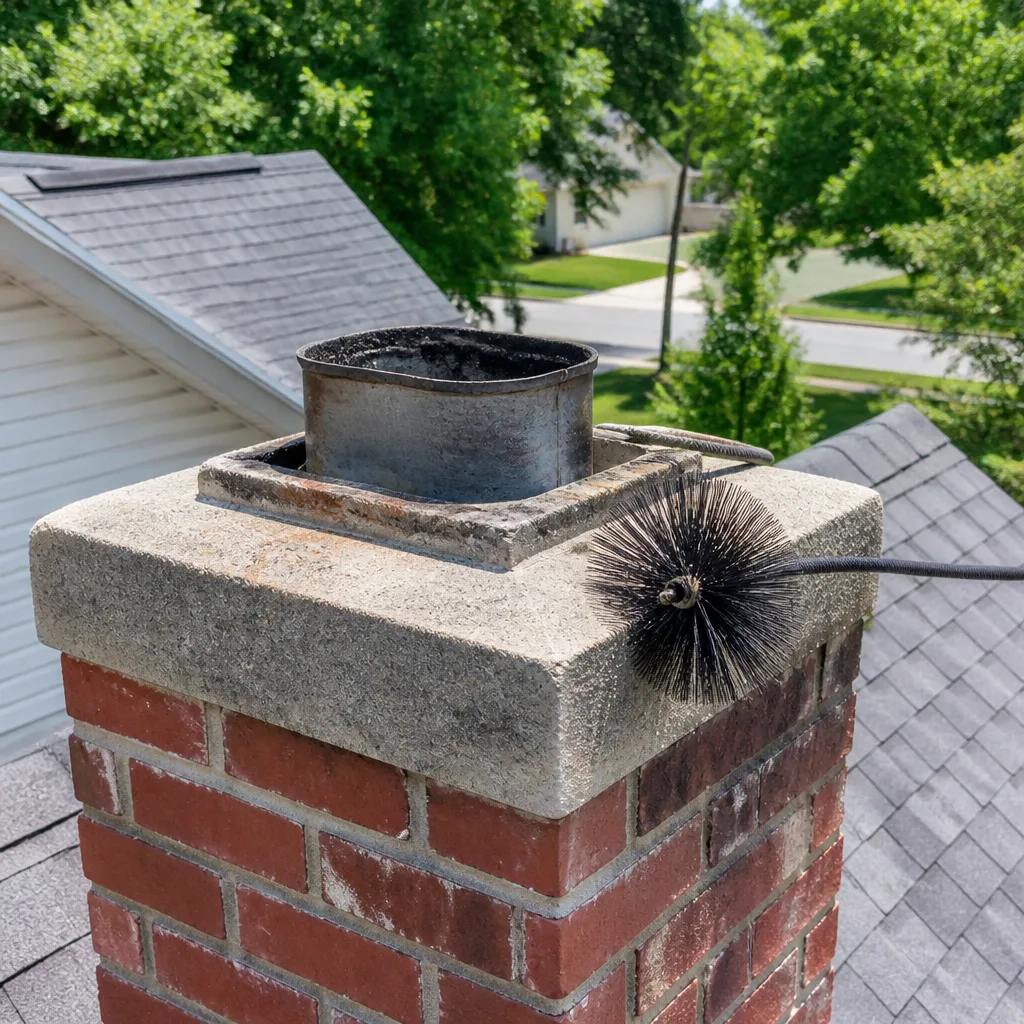
 Sweep & inspection
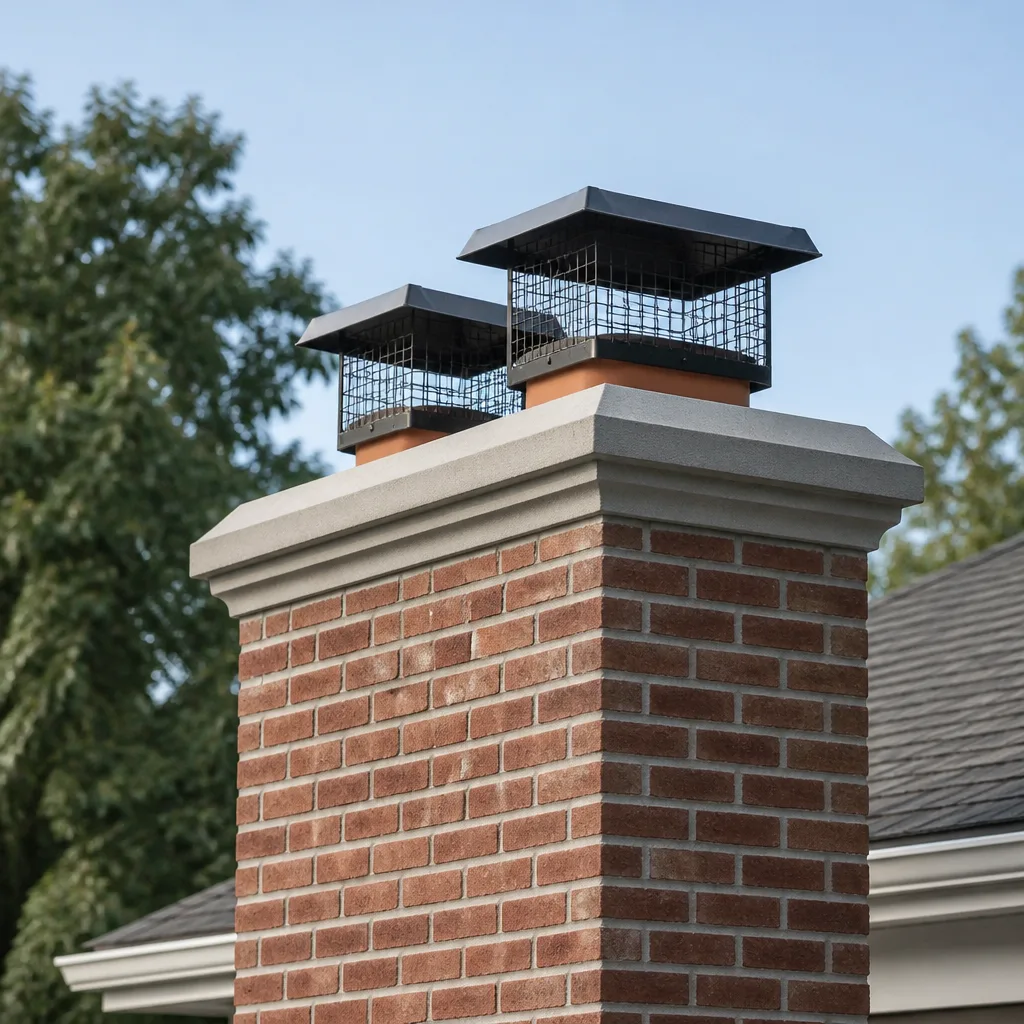 Caps & crowns
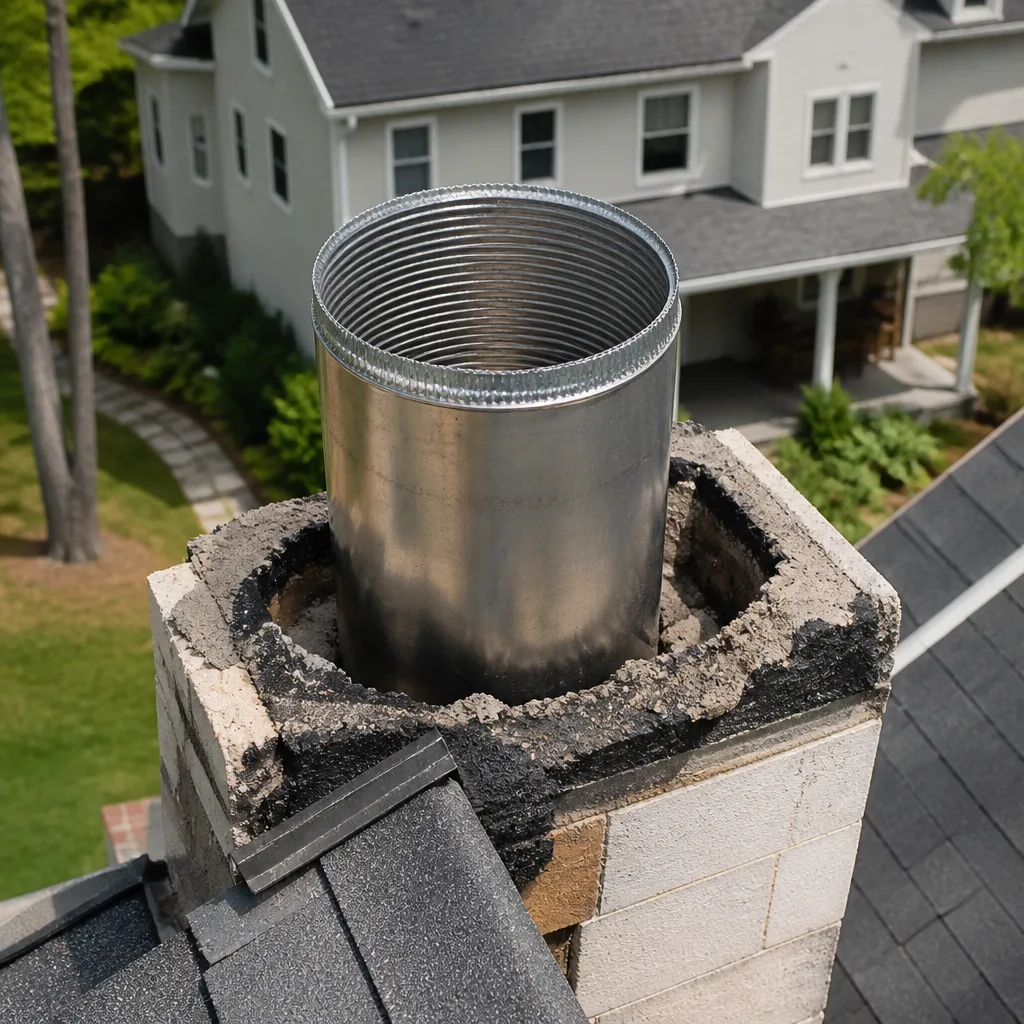 Flue relining
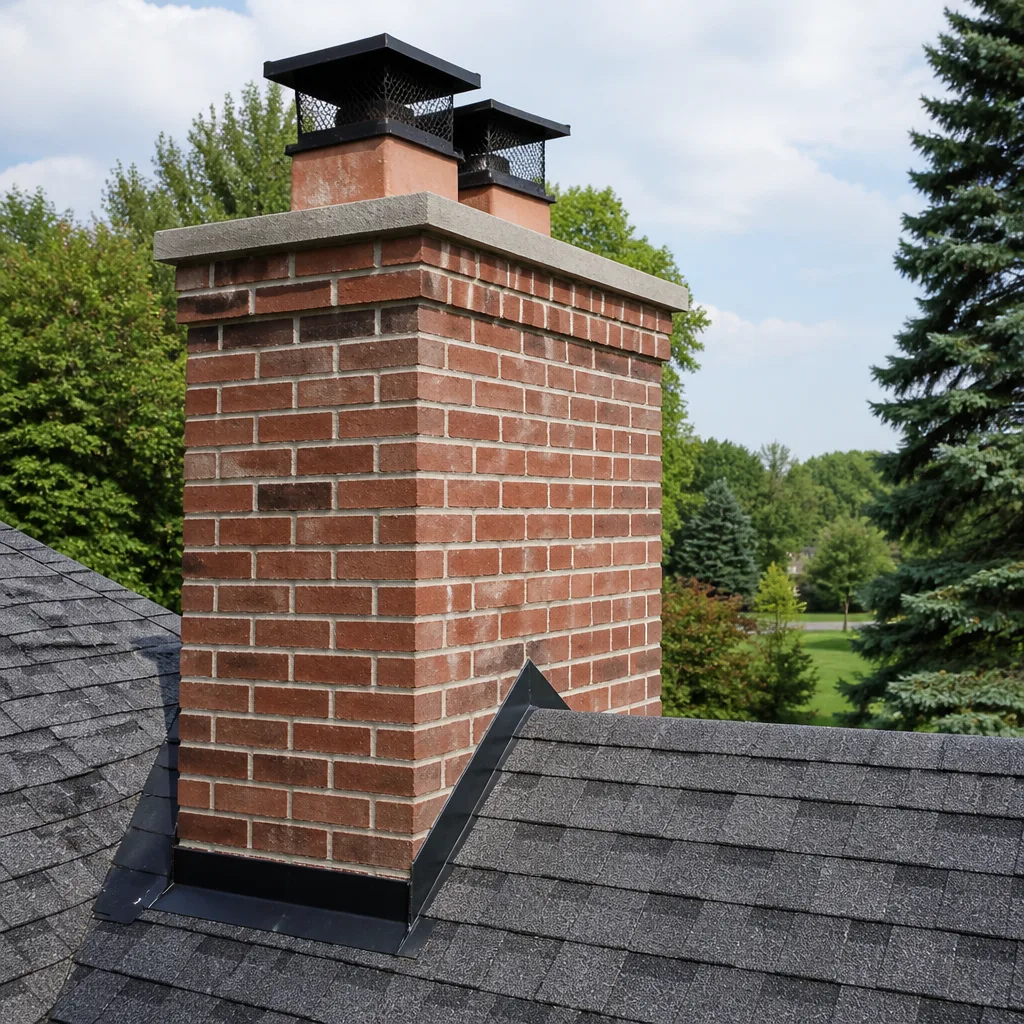 Masonry repair
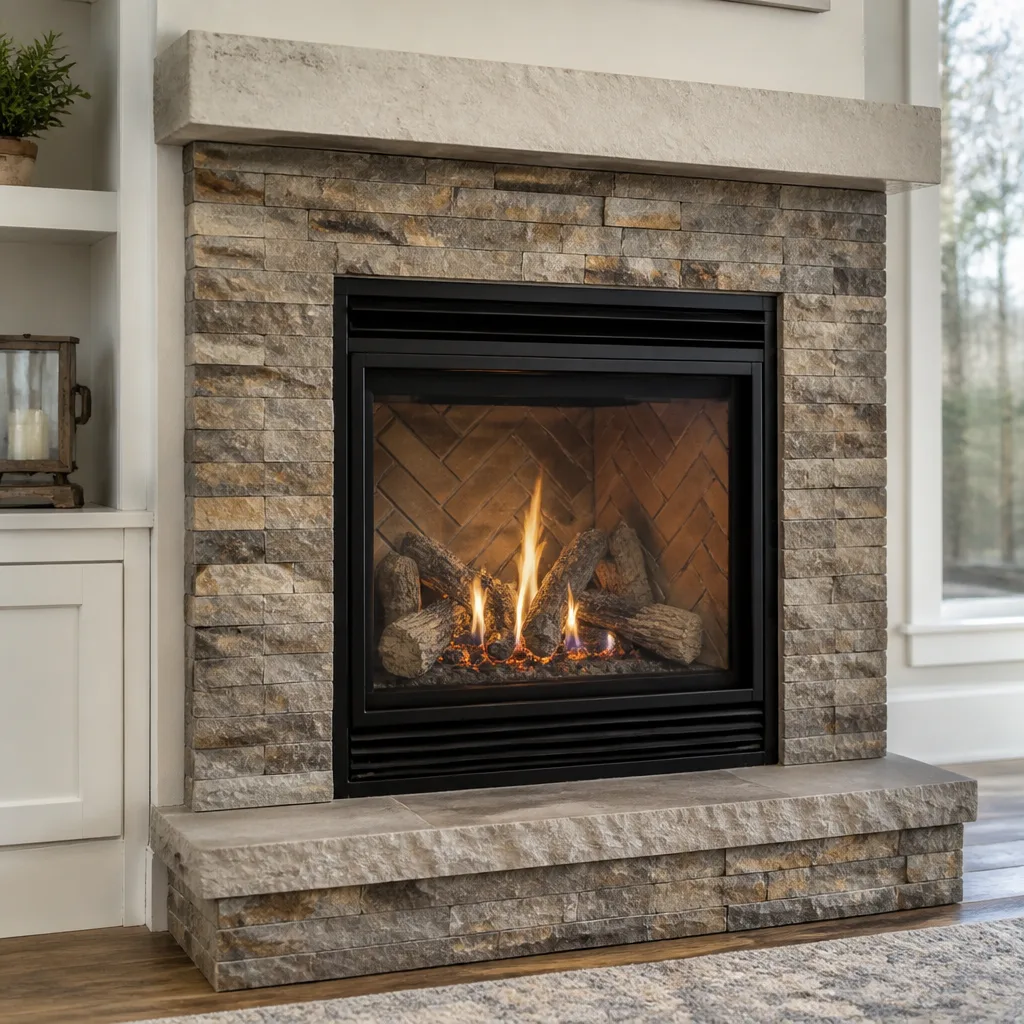 Gas fireplace service
Level 1 sweep and inspection to the NFPA 211 annual standard - flue, crown, cap, and flashing checked and photographed
Chimney sweep logs do not sweep chimneys. They loosen some creosote - which then falls where a brush and vacuum still have to collect it.
Fast, Reliable Chimney Inspection Across Lindon
If you burn wood as your main heat out here, you already know the chimney is the part of the house you can’t afford to guess about. We inspect chimneys across Lindon, from the older brick farmhouses near the center to the stucco-and-stone homes up against the foothills, and we tell you plainly what’s inside the flue before the season starts. Our technicians have up to 9 years of experience reading exactly the conditions this town produces: heavy creosote from long winters, and downdrafts off the canyon mouth that push smoke back where it doesn’t belong. Call (833) 513-8116 to book an inspection. We answer 24/7. Fast dispatch from 7am to 7pm, Sunday through Friday.
Why Lindon Homeowners Call Chimney Sweep American Fork for Chimney Inspection
Lindon is a small town with a lot of different chimneys in it, and that’s why we treat inspections here as diagnostic work rather than a quick brush-and-go. A home on the east side closest to the canyon mouth and a mid-century brick ranch near the center can have the identical complaint, smoke in the room, and two completely different causes. Getting that right matters more than getting it fast.
We’re a chimney specialist, not a general handyman outfit. That means the same company that inspects your flue is equipped to line it with DuraFlex or resurface it with HeatShield if the inspection says so, so you’re not handed off between contractors with a gap in the middle. When a home inspector or insurance carrier flags your chimney, we can document what’s actually there, with camera evidence you can see for yourself, and put together the repair in the same place.
We also spend a fair amount of time on Lindon properties where a wood stove is the primary heat source all winter. Those homes need a different conversation than a decorative fireplace in a newer subdivision, and we’d rather have that conversation honestly than just reset the same schedule every year.
Styles & brands we work with
- Sweep & inspection
- Caps & crowns
- Flue relining
- Masonry repair
- Gas fireplace service
Our Chimney Inspection Services in Lindon
A chimney inspection isn’t one service. It’s a scope, and the right level depends on what’s happening in your home. Here’s how we approach each level in Lindon.
Level 1 Inspection
A Level 1 inspection covers what’s readily accessible: the firebox, damper, visible flue, and the exterior of the chimney. It’s the right call for a well-maintained home with no changes since the last sweep. In Lindon’s newer subdivisions, where factory-built and gas fireplaces are common, a Level 1 usually tells us everything we need to know about venting condition and cap placement.
Level 2 Inspection
A Level 2 inspection goes further, into the smoke chamber, the flue liner, and the accessible parts of the chimney structure, typically with a camera. This is the level we recommend for most older Lindon homes and for any property that’s changed hands, changed appliances, or had a chimney fire. On the older brick farmhouses near the center, a Level 2 is often where an undersized or unlined flue finally shows itself.
Level 3 Inspection
A Level 3 inspection is the deepest scope, and it’s warranted when a Level 1 or Level 2 turns up a defect that can’t be seen without opening up part of the chimney or its surrounding structure. We don’t recommend a Level 3 casually. When we do, it’s because there’s a specific finding that justifies it, and we’ll explain what we expect to learn before any opening is made.
Camera Inspection
A camera inspection lets us read the inside of the flue, the smoke chamber, and the liner joints without guessing from the firebox. This is the part most homeowners never get to see, and it’s where third-degree creosote glaze and cracked clay tile tend to hide. We’ll show you the footage so the findings are yours to verify, not just ours to describe.
For the full scope of what each of these covers, see our chimney inspection service page. Every visit includes a written report and photo documentation, and nothing gets recommended that the camera hasn’t shown.
Trusted Brands We Service in Lindon
When an inspection turns up a liner problem, the fix is only as good as the materials going in. We work with professional-grade brands including DuraFlex for flexible liner systems, HeatShield for flue resurfacing, Famco for venting components, and Copperfield for caps and crowns. These are the products we install, not a shopping list we hand off. HeatShield in particular lets us resurface a deteriorating flue liner that would otherwise need a full reline, and a lot of general contractors aren’t trained or equipped to apply it. When a Lindon home needs lining work, the same company that found the problem handles the repair, which keeps the warranty and the communication in one place.
Common Chimney Inspection Problems We See in Lindon Homes
Some of what we find in Lindon is universal to wood heat. Some of it is specific to this town’s geography and housing stock.
- Foothill downdraft on the east-side streets. Strong east winds off the Wasatch foothills push smoke back into living spaces on homes closest to the canyon mouth, and it’s easy to mistake for a blockage. A draft reading during inspection usually tells a different story than the brush does.
- Undersized or unlined flues in older brick farmhouses. The older masonry stock near the center often hides flue problems that only surface once the brush is actually in the chimney. A quick pass from the firebox never reveals them.
- Third-degree creosote in the smoke chamber. In homes where a wood stove is running hard all winter, glazed creosote can build up in places a routine sweep doesn’t reach. That’s a fire risk, and it’s why we check the smoke chamber, not just the flue.
- Spalling brick and cracked crowns on legacy masonry. Water gets into the masonry through a failed crown, and the damage only shows up when an inspection goes past the firebox and damper. Sealing a cracked crown early is a small repair; letting it go turns into a rebuild.
See the difference
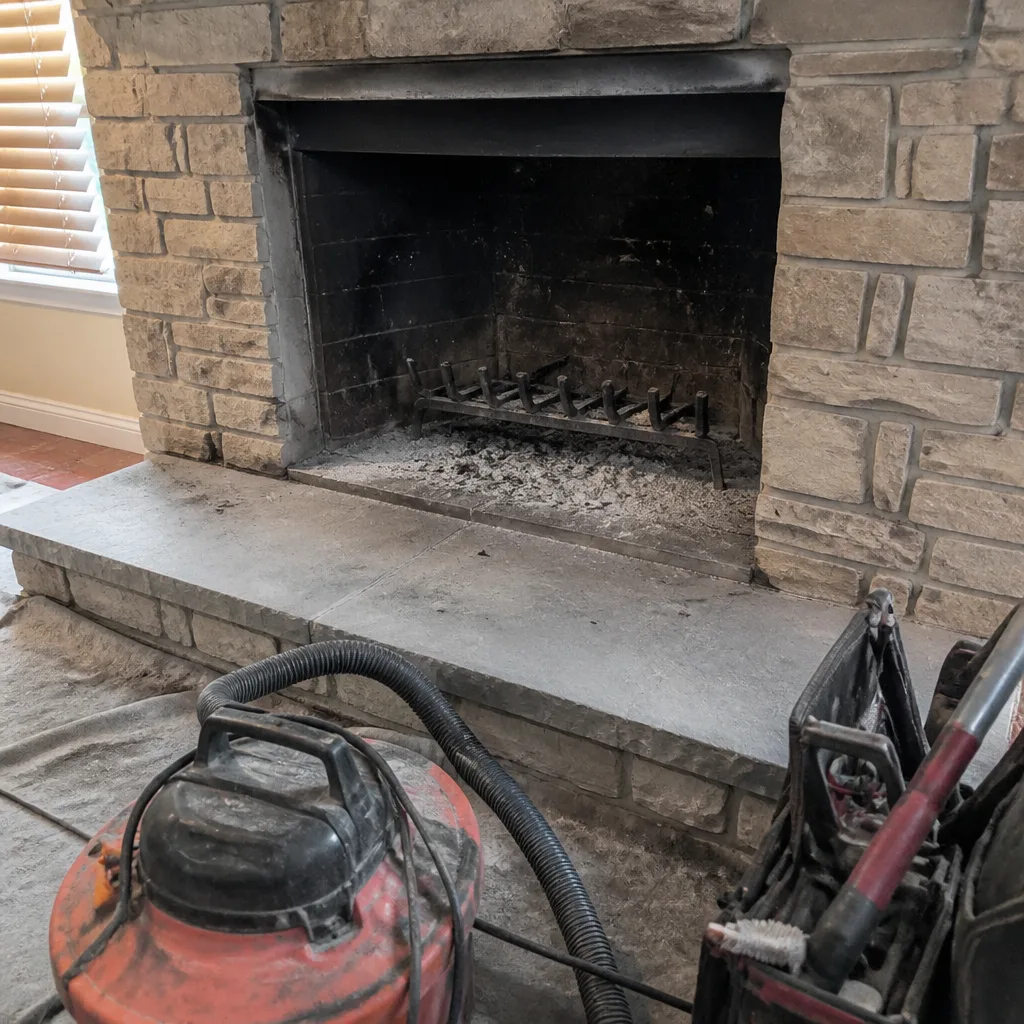 Before
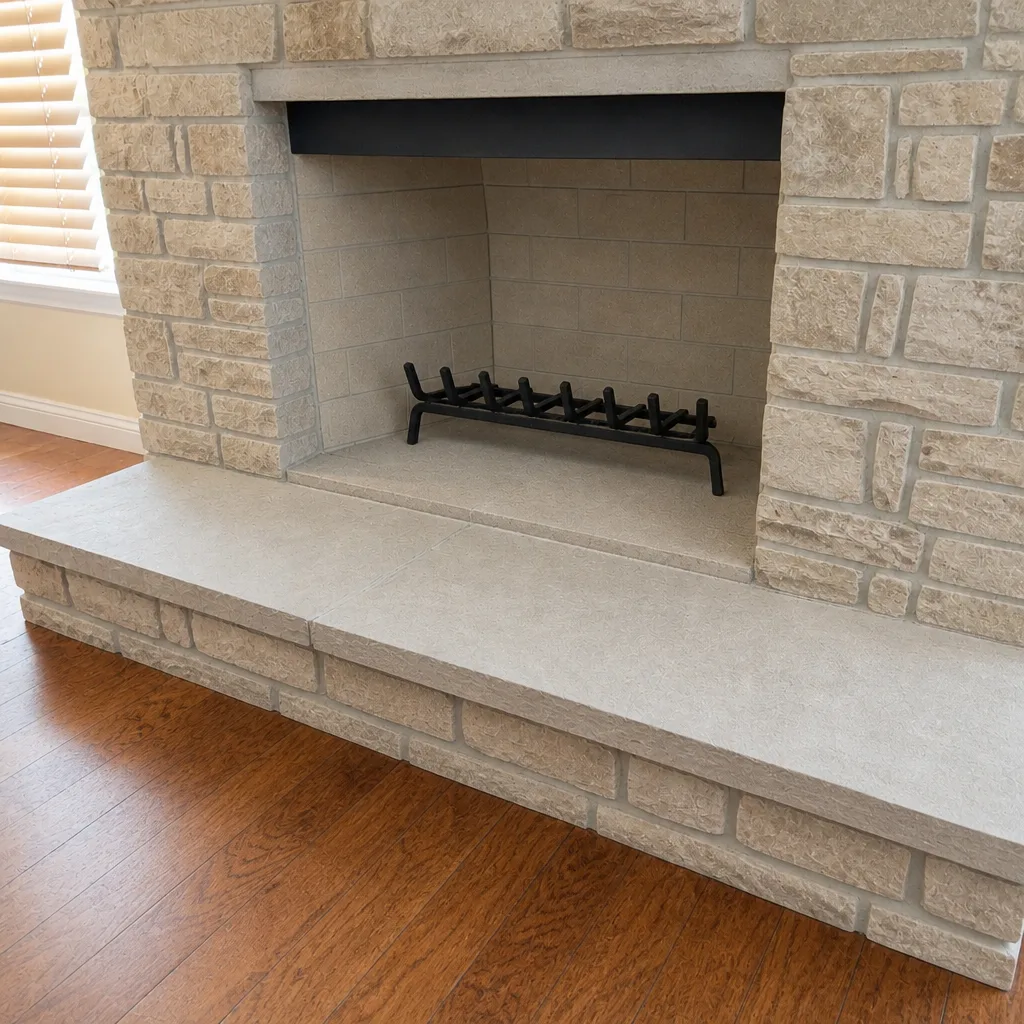 After
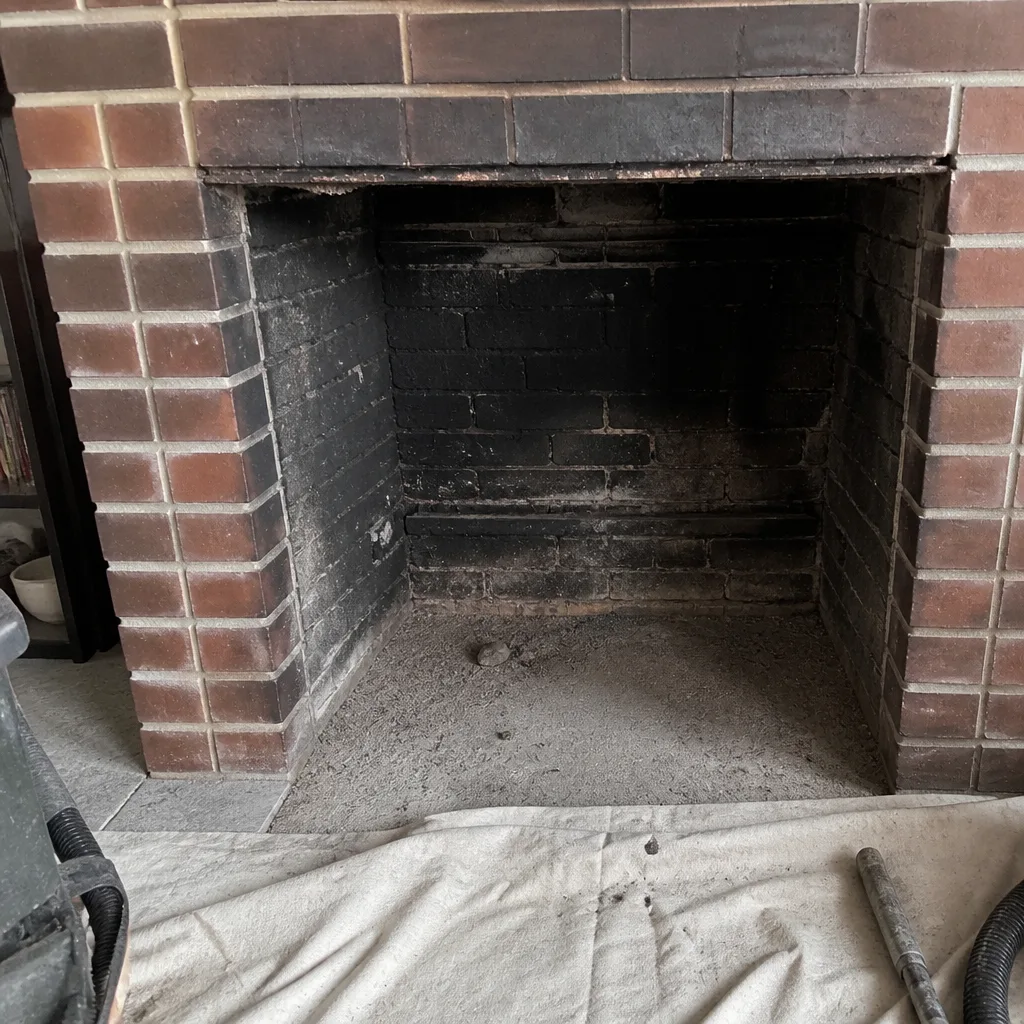 Before
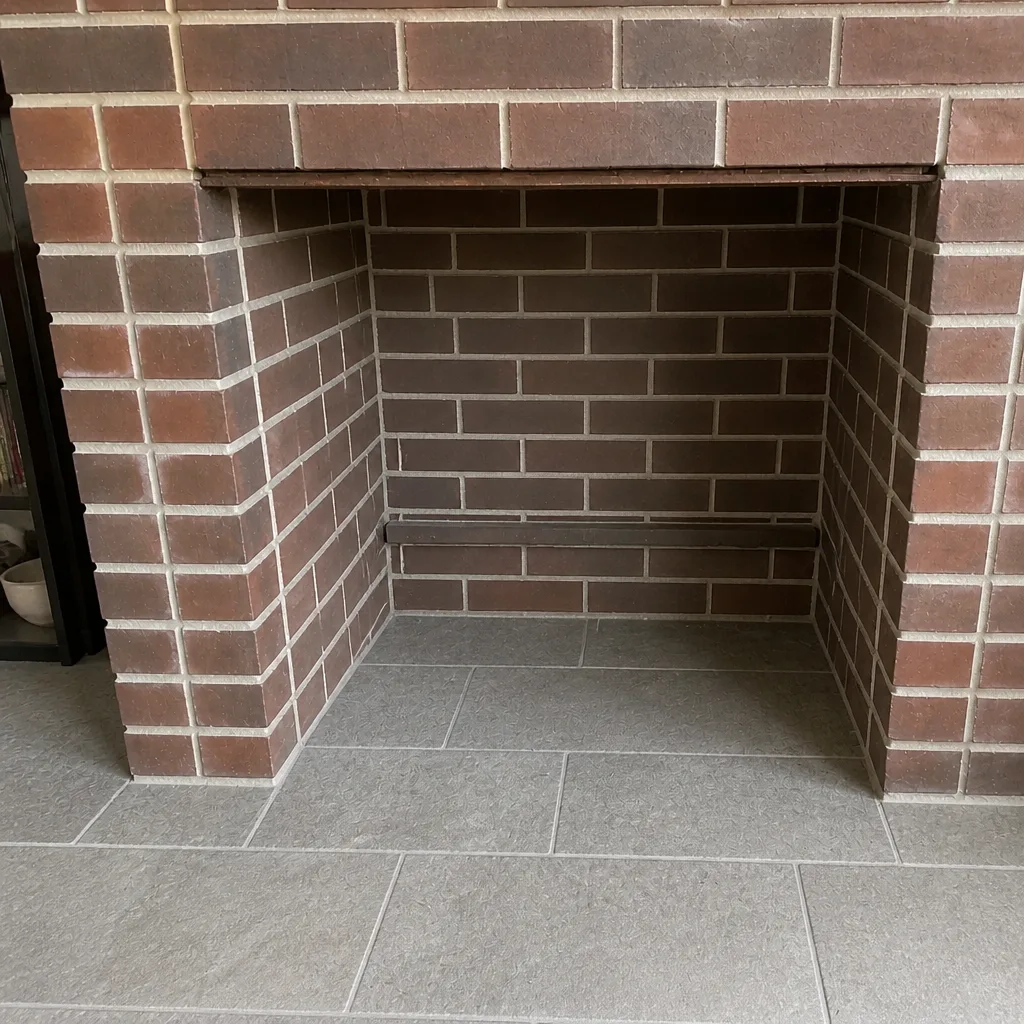 After
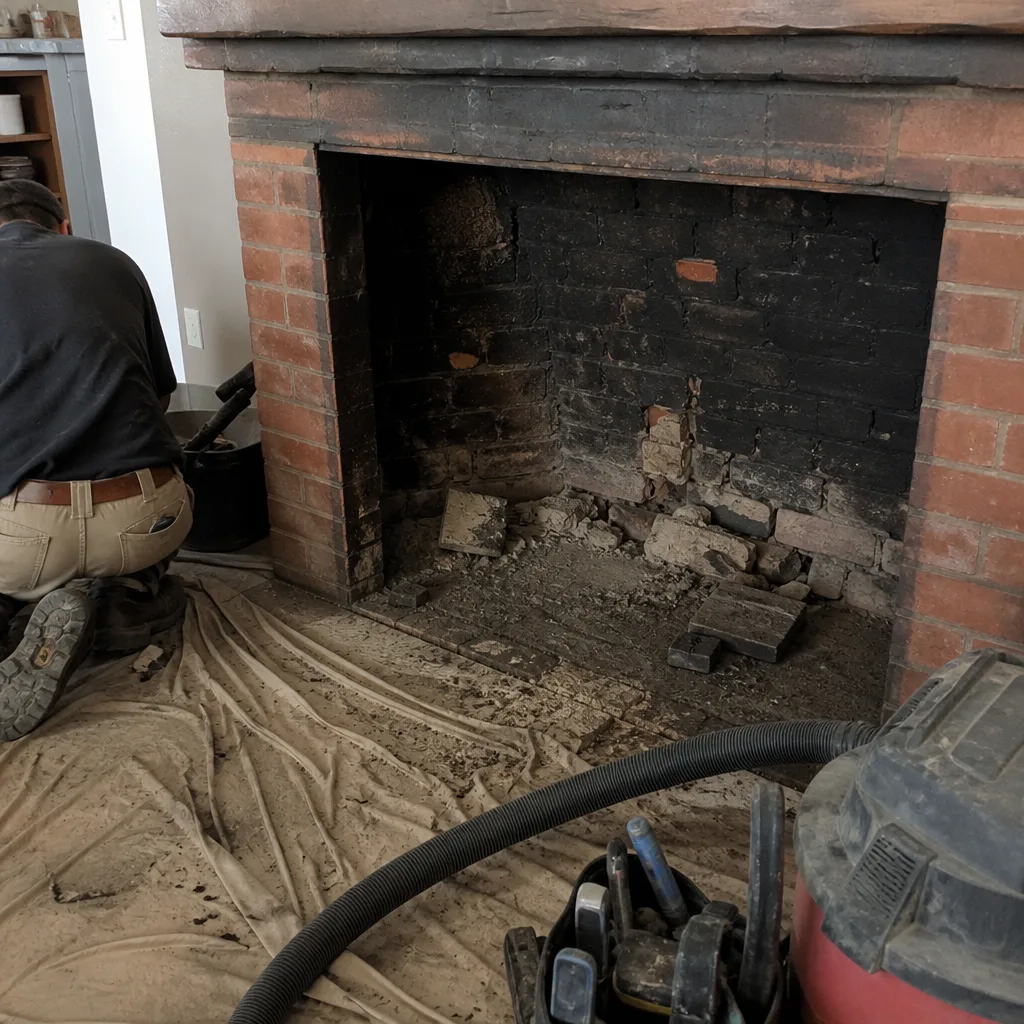 Before
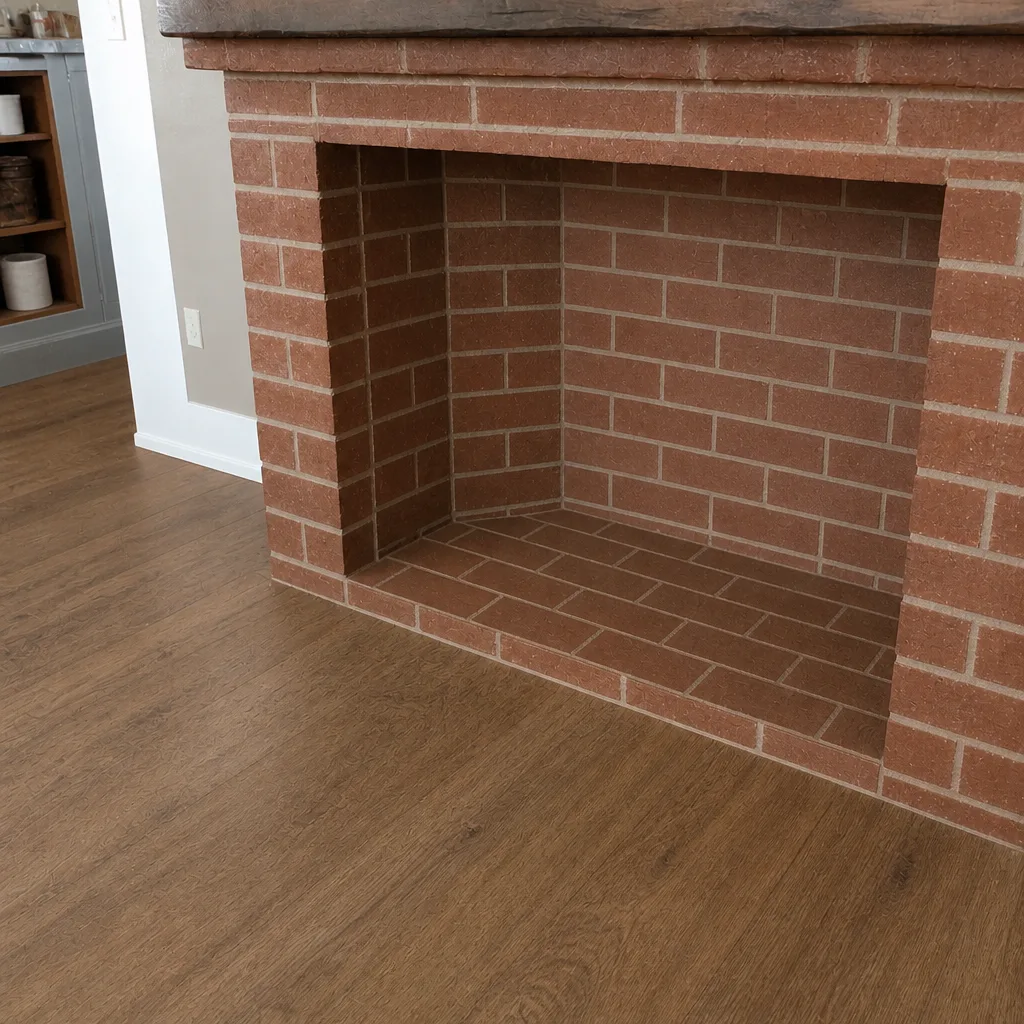 After
How Lindon’s Climate and Housing Shape an Inspection
Lindon sits directly under the Mount Timpanogos foothills, and that position drives a lot of what we find here. Cold, snowy winters with frequent valley inversions keep heating appliances running hard for months, and the strong east winds coming down the Wasatch foothills create downdraft and backdraft problems on the east-side streets closest to the canyon mouth. On those homes, a draft reading during inspection matters as much as the creosote check, and the two findings rarely come from the same visit elsewhere in the valley. Further out from the canyon, the hot dry summers raise their own concerns, mainly wildfire embers finding their way past a failing cap.
The housing stock splits the work cleanly. Mid-century and older brick ranch homes and farmhouses along the older streets tend to have original masonry fireplaces and clay tile liners, where most of the liner and crown repairs happen. The 1990s to 2010s subdivisions of larger stucco-and-stone homes mostly have factory-built and gas fireplaces, and those visits are usually about gas vent condition and cap service. We treat both as real inspection work, because we’ve seen a modern gas appliance fail just as quietly as a legacy fireplace.
On a rural Lindon parcel where a wood stove is the primary heat source all winter, the picture is different again. A certified sweep typically finds far heavier first- and second-degree creosote than the once-a-year schedule assumes, and often a flue liner in the older brick farmhouse that turns out undersized or unlined only once the brush is in. The usual remedy is a Level 2 camera inspection to read the flue liner and smoke chamber before sweeping, then a HeatShield or DuraFlex liner sized to the stove, plus honest burning-practice guidance. Seasoned wood and avoiding smoldering overnight loads stretch the safe sweep interval rather than just resetting it.
Pricing for Chimney Inspection in Lindon, UT
Inspection pricing here is set per job by a written estimate, and the estimate is free. As a general guide for the Lindon market, a typical Level 1 inspection runs $150 – $250, a Level 2 inspection with camera runs $250 – $450, and a Level 3 inspection, which involves opening up part of the structure, starts around $500 and goes up from there depending on access. A camera-only flue or smoke chamber inspection is usually in the $200 – $350 range. If the inspection turns up liner or crown work, that gets its own written estimate before anything is booked, and you’ll see the camera footage that justifies it.
We Also Serve Cities Near Lindon
We serve homeowners across the surrounding valley, including Pleasant Grove, Orem, Vineyard, and American Fork. If you’re just outside our primary area, call and we’ll let you know whether we can get to you. For everything we do across the Lindon area and the neighboring towns, we’re happy to talk through what your chimney likely needs before anyone comes out.
Serving Lindon, UT – Our Local Coverage Area
We serve Lindon and nearby communities. Use the map below to see the area we cover. If you’re nearby, we can almost certainly help.
FAQs – Chimney Inspection in Lindon
A wood stove used as primary heat in Lindon should be inspected once a year, and often swept on a shorter interval than the standard schedule assumes. Heavier creosote loads build up faster than a once-a-year sweep accounts for when the stove runs hard through a snowy winter. Call (833) 513-8116 for a free estimate.
Smoke rollback on the east-side streets closest to the canyon mouth is usually a draft problem, not a blockage. Strong east winds off the Wasatch foothills drive downdrafts that overcome the chimney’s normal upward pull, and cap placement and flue height both influence how bad it gets. A draft reading during inspection tells us which. Call (833) 513-8116 to schedule one.
No. A Level 1 inspection checks what’s readily accessible and can miss an undersized or unlined flue in an older brick farmhouse. That’s why we recommend a Level 2 camera inspection for older Lindon masonry homes and for any property with a change of appliance or ownership. Call (833) 513-8116 for an exact quote, and estimates are free.
First-degree creosote is the light, flaky buildup a brush removes easily. Third-degree creosote is glazed and hardened, often in the smoke chamber, and a standard brush won’t touch it. It’s a real fire risk, which is why an inspection on a heavily used stove needs to reach past the flue. Call (833) 513-8116 to book an inspection.
They can mask or mimic other problems. Inversions trap cold, dense air that changes how a chimney drafts, and canyon winds create downdrafts that look like blockages when the flue is actually clear. That’s why we check draft alongside creosote, not after it. Call (833) 513-8116 for a written estimate.
If your inspection report from a home inspector or your insurer flags something, or if you just want to know what’s inside your flue before the burning season starts, call us at (833) 513-8116 for a free estimate. We answer 24/7, with fast dispatch from 7am to 7pm, Sunday through Friday. Nothing gets recommended without camera evidence you can see, and if the work can safely wait, we’ll tell you so.
Written by the team at Chimney Sweep American Fork.